

American Hop Varieties
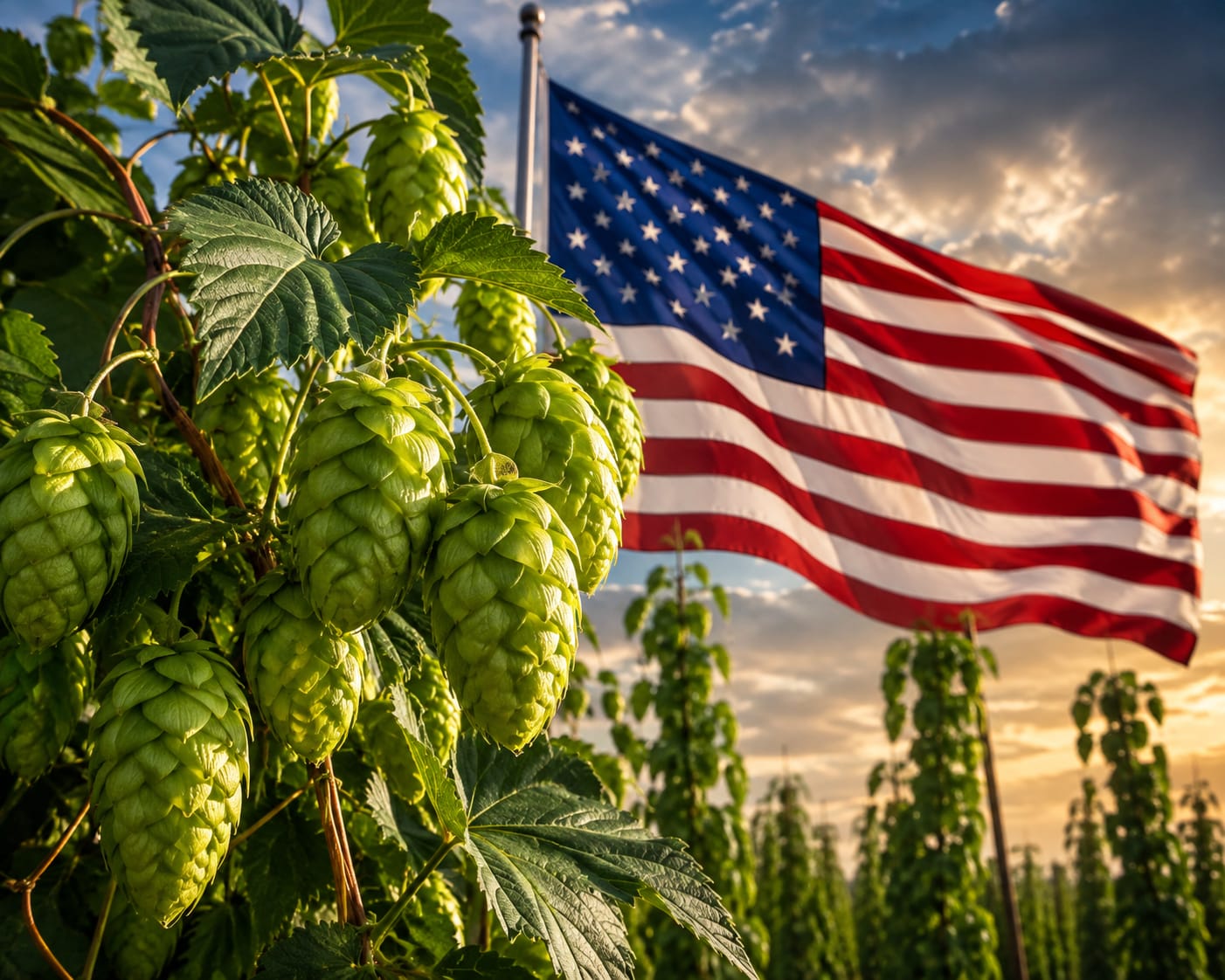
American Hop Varieties: Characteristics, Aromas and Brewing
American hop varieties have played a central role in the development of modern craft beer. From the grapefruit and floral character of Cascade to the tropical intensity of Citra and Mosaic, hops grown and developed in the United States have helped define American Pale Ale, West Coast IPA, Double IPA and, more recently, Hazy IPA and New England IPA.
For homebrewers and professional brewers, however, choosing an American hop should involve more than simply selecting the most popular name. Every variety has a particular combination of alpha acids, essential oils and sensory characteristics. Addition timing, hop quantity, wort composition and fermentation conditions can then modify how those characteristics appear in the finished beer.
This guide examines some of the most important American hop varieties, their typical aroma profiles and their most effective brewing applications.
What Makes American Hops Distinctive?
The term “American hops” covers a wide range of varieties rather than one single sensory family. Nevertheless, many modern US cultivars are associated with expressive citrus, pine, resin, tropical fruit, stone fruit and berry aromas.
A large part of commercial American hop production is concentrated in the Pacific Northwest, where suitable soil, irrigation, summer daylight and established agricultural expertise support both traditional cultivars and modern breeding programmes. Washington, Oregon and Idaho have become particularly important production areas.
American hops can generally be divided into three functional groups:
- Aroma hops, selected mainly for their aromatic contribution.
- Bittering hops, characterised by relatively high alpha-acid levels and efficient bitterness production.
- Dual-purpose hops, suitable for both bittering and late aromatic additions.
This classification is useful, but it should not be treated as a strict rule. Several modern high-alpha varieties also deliver complex aromas and can be used throughout the brewing process.
Cascade: The Classic American Citrus Hop
Cascade is one of the varieties most closely associated with the birth of American craft brewing. Released in 1972, it became a defining ingredient in American Pale Ale and helped establish the citrus-forward identity of US beer.
Its aroma profile typically combines grapefruit, floral, pine, herbal and lightly spicy notes. With a typical alpha-acid range of approximately 4 to 9 percent, Cascade is primarily considered an aroma hop, although it can provide balanced bitterness when used earlier in the boil.
Cascade works particularly well in:
- American Pale Ale
- American Amber Ale
- Porter
- American Wheat Beer
- Classic West Coast IPA
- Blonde Ale with a citrus character
For homebrewers, Cascade is also an excellent variety for learning how addition timing affects hop expression. A boiling addition emphasises bitterness, while whirlpool and dry-hop additions preserve more grapefruit and floral character.
Centennial: Citrus, Floral Notes and Greater Intensity
Centennial is sometimes described as “Super Cascade” because it shares some of Cascade’s citrus and floral qualities but usually has a higher alpha-acid content and a more intense overall profile.
Typical descriptors include lemon, orange, floral, tropical and woody notes. Its alpha-acid content commonly falls between 8.5 and 12 percent, making Centennial a genuine dual-purpose hop.
Centennial can be used as a single hop, but it is especially effective in combinations. Pairing Centennial with Cascade creates a recognisable classic American profile, while combining Centennial with Citra or Mosaic adds a more modern tropical dimension.
Recommended styles include:
- American IPA
- Double IPA
- American Pale Ale
- Red IPA
- American Barleywine
- American Amber Ale
Centennial is a useful choice when a recipe requires both firm bitterness and a clear citrus aroma without becoming exclusively tropical.
Chinook: Pine, Resin and Spicy Depth
Chinook is a powerful dual-purpose hop traditionally associated with pine, resin, spice and grapefruit. Its assertive character made it a major component of many early West Coast IPAs.
Used for bittering, Chinook can produce a firm and direct bitterness. Used late in the process, it develops a more recognisable piney and resinous identity. Excessive quantities, especially in a recipe with low malt support, may result in a harsh or overly dominant character.
Chinook is particularly suitable for:
- West Coast IPA
- American Stout
- Robust Porter
- American Brown Ale
- Double IPA
- Strong Amber Ale
For a layered West Coast hop profile, Chinook can provide the resinous base while Cascade, Centennial or Citra adds brighter citrus notes.
Amarillo: Orange and Floral Elegance
Amarillo is widely appreciated for its sweet orange, citrus and floral character, often accompanied by subtle tropical or stone-fruit impressions. Compared with sharper grapefruit-forward varieties, Amarillo can give a beer a softer and more rounded citrus expression.
It is frequently used in late-boil additions, whirlpool hopping and dry hopping. Amarillo is particularly effective in:
- American Pale Ale
- IPA
- Hazy IPA
- American Wheat Beer
- Session IPA
- Hop-forward Blonde Ale
Amarillo combines well with Simcoe, where its orange character complements Simcoe’s pine and grapefruit, and with Citra, where it can reinforce citrus while moderating some of the more intense tropical notes.
Simcoe: Pine, Grapefruit and Complex Fruit
Simcoe is one of the most versatile modern American hop varieties. Released in 2000, it is known for a profile that includes citrus, grapefruit, pine or woody qualities, stone fruit and tropical fruit.
Its typical alpha-acid range of 10 to 16 percent makes it suitable for both bittering and aroma additions. Simcoe is strongly associated with hop-forward IPAs but can also add depth to darker, malt-driven beers such as Porter and Stout.
Simcoe can behave differently depending on dosage, hop lot and process. In some beers, grapefruit and pine dominate. In others, the result may lean towards passion fruit, apricot or berry-like notes.
Common pairing options include:
- Simcoe and Amarillo for pine and orange
- Simcoe and Citra for grapefruit and tropical fruit
- Simcoe and Mosaic for a highly complex modern IPA
- Simcoe and Centennial for a cleaner West Coast profile
Citra: Intense Citrus and Tropical Fruit
Citra is one of the most influential aroma hops in contemporary brewing. Its typical profile includes citrus, tropical fruit, stone fruit and subtle woody notes, with frequent sensory references to lime, orange, grapefruit, mango and passion fruit.
With an alpha-acid range commonly listed between 10 and 16 percent, Citra can be used throughout the process. Its greatest value, however, is usually obtained through whirlpool additions, dry hopping or combinations of both.
Citra is suitable for:
- American IPA
- Hazy IPA and NEIPA
- Double IPA
- Session IPA
- American Pale Ale
- Modern Pilsner
- Hoppy Wheat Beer
Although Citra performs well as a single hop, combining it with a more resinous or herbal variety can improve structure. In very fruit-forward recipes, Mosaic, El Dorado or Amarillo can extend its tropical and citrus range.
Mosaic: A Multi-Layered Aroma Profile
Mosaic was released in 2012 and takes its name from the broad “mosaic” of aromas it can produce. Frequently reported characteristics include berry, citrus, tropical fruit and stone fruit, sometimes accompanied by pine, herbal, grassy or lightly earthy impressions.
Its alpha-acid level generally makes it a dual-purpose variety, but Mosaic is particularly valued for late hopping and dry hopping. Its complex profile also makes it a strong candidate for single-hop beers.
Mosaic is commonly used in:
- Hazy IPA
- American IPA
- Double IPA
- American Pale Ale
- Session IPA
- Hop-forward Saison
One important consideration is dosage. At moderate levels, Mosaic can produce attractive berry and tropical notes. At very high levels, some hop lots may contribute more savoury, herbal or onion-like impressions. The result depends on crop year, lot selection, freshness and recipe composition.
Columbus, Tomahawk and Zeus: The CTZ Family
Columbus, Tomahawk and Zeus are often grouped under the abbreviation CTZ because the varieties have closely related brewing characteristics and are frequently treated as interchangeable in commercial use.
CTZ hops are known for high bittering potential and a strong profile of resin, dankness, spice, earth and citrus. They are particularly useful when a recipe requires efficient bitterness combined with a recognisable American hop character.
Typical applications include:
- West Coast IPA
- Double IPA
- Imperial Stout
- American Barleywine
- Black IPA
- Strong Pale Ale
In late additions, CTZ can introduce a distinctly dank and resinous quality. When combined with Citra or Mosaic, it can prevent a recipe from becoming excessively sweet or purely fruit-driven.
Choosing the Right American Hop for Your Beer
Aroma descriptors and alpha-acid ranges provide a useful starting point, but they cannot fully predict the finished beer. Hops are agricultural products, and their composition varies according to crop year, growing location, processing, storage and individual lot.
Published technical values should therefore be considered representative ranges rather than fixed specifications. BarthHaas specifically notes that alpha-acid and oil values may vary considerably by crop year, while sensory characteristics do not always transfer directly from raw hops to finished beer.
When selecting American hop varieties, consider:
- The target beer style
- Desired bitterness intensity
- Citrus, tropical, pine, resinous or floral balance
- Boil, whirlpool and dry-hop timing
- Total oil content
- Alpha-acid percentage of the actual hop lot
- Interaction between multiple varieties
- Fermentation and biotransformation potential
- Dry-hop quantity and contact time
For example, two varieties may both be described as “citrus”, but Cascade may provide floral grapefruit while Citra produces lime, tropical fruit and stone fruit. Likewise, Simcoe and Chinook may both contribute pine, yet Simcoe often brings more fruit complexity.
From Hop Descriptors to a Predictable Aroma Profile
The main challenge in recipe development is not identifying the characteristics of one hop. The real challenge is predicting how several varieties, quantities and addition times will interact.
HOP CONTROL addresses this problem through an extensive database and an algorithm designed to combine the aromatic contribution of each hop addition. The software considers hop varieties, boiling time and dry hopping to generate a visual prediction of the final aroma profile. Its database currently includes more than 330 hop varieties.
For homebrewers, this makes it possible to compare different American hops before brewing, evaluate possible substitutions and design a hop schedule around a specific sensory target. For professional brewers, the same approach can help reduce trial batches and improve recipe repeatability.
Conclusion
American hop varieties offer one of the broadest aromatic palettes available to brewers. Cascade and Centennial represent the classic citrus and floral American tradition. Chinook and CTZ provide pine, resin and dank intensity. Amarillo contributes sweet orange and floral notes, while Simcoe combines pine with complex fruit. Citra and Mosaic deliver the tropical, citrus and berry-forward profiles associated with many modern IPAs.
The best hop choice is not necessarily the variety with the strongest aroma or highest alpha-acid content. It is the variety, or combination of varieties, that fits the intended beer style, process and final sensory target.
Understanding individual hop characteristics is the first step. Modelling how those hops work together is what turns a list of ingredients into a controlled aroma profile.

Enrico Mollica
Aeronautical engineer and manager of a team specialized in numerical simulations in the automotive field. Consultant for breweries on hopping techniques and author for the Giornale della Birra. After years studying the aromatic qualities of hops, in 2023 he created the algorithm behind the HOP CONTROL software.
The tool for complete hop control is here.
Join brewers using data — not guesswork — to design their aroma.